The Right to Connect: Underwriting the Option Value of a UK Grid Queue
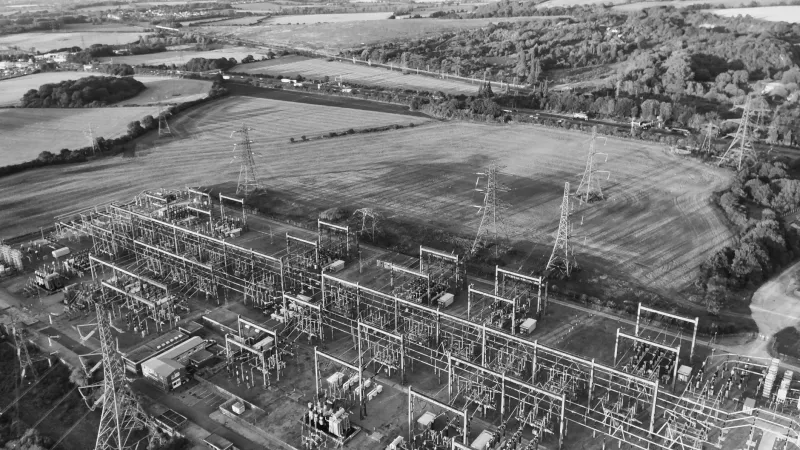
A grid connection is now one of the scarcest inputs in UK renewables. In 2026, the binding constraint is not always planning consent, module supply or battery pricing. It is the position in the queue and the conditions attached to it. That has turned connection rights into assets with a price, a cost of carry and a counterparty. Investors who treat the queue as a scheduling detail are mispricing the risk. Those who treat it as a security are closer to the mark, provided they underwrite the process rather than the promise.
The queue is an option, not a promise
At its simplest, a connection offer confers a conditional right to export or import at a specified point on the network. Its value resembles a real option. The holder can spend development capital to keep the project alive, defer final investment decision or relinquish the position. But unlike a clean financial option, it carries obligations: securities, milestones, land rights and termination provisions. The correct starting point is not what is the connection date. It is what must be true for that date to hold.
That distinction matters because a connection offer is not a contract for energy. It is a contract for a process. The process can be delayed by network reinforcement, planning conditions, supply-chain sequencing or changes to queue rules. Each of those outcomes changes the value of the position without changing the underlying project fundamentals. A queue position is therefore best valued as a probability-weighted claim on a future date, not as a fixed date with a discount rate applied to it.
Separating timing from fundamentals
Two projects can share identical fundamentals and differ only in time-to-power. If one energises in 2028 and another in 2031, their equity returns can diverge materially even if both use the same technology and the same revenue assumptions. A late connection is not a rounding error. It is a second capital call, a longer holding period and a delayed exit.
Investors should therefore underwrite a distribution of dates rather than a single date. In UK infrastructure, P50 and P90 conventions are familiar, but grid dates are often skewed rather than symmetrically uncertain. Assign probabilities to milestone outcomes. Test the base case against a delayed case and an accelerated case. Then ask what the project is worth if the connection slips by two years and the revenue contract does not.
The cost of carry is the discipline that makes this tangible. Deposits, securities, grid studies, legal fees, land options and development team costs all accumulate before first revenue. A queue position acquired at a headline price can look cheap until the carry is added. The relevant comparison is not the cost of the position alone. It is the position plus the capital required to hold it until energisation.
Reform changes the shape of the claim
Ofgem and NESO have been reshaping the connections process. The direction is clear: priority is becoming more conditional and more evidence-based. Milestones, queue management and the removal of speculative entries are intended to improve the quality of projects seeking connection. For investors, that cuts both ways. A cleaner queue is more credible, but the rules governing priority are still evolving, and regulatory discretion introduces reordering risk.
A connection right is only as valuable as the regime that recognises it. Due diligence must therefore cover the current milestone regime, the consequences of missing a milestone and the scope for bilateral or accelerated offers. It should also test whether the connection can be transferred, financed or sold without triggering a repricing or termination. In a market where queue positions are traded informally, the legal plumbing matters as much as the engineering.
A due-diligence checklist for connection rights
- Contractual standing. Is the offer accepted? Are conditions precedent satisfied? What securities are posted and when are they returned? What are the termination triggers?
- Milestone evidence. Map every milestone to a document, an owner and a date. Distinguish developer obligations from network operator obligations.
- Date probability. Build a scenario table with base, delayed and accelerated cases. Include planning, land, supply chain and network reinforcement assumptions.
- Cost of carry. Quantify deposits, securities, studies, legal fees, land options and holding costs. Include the opportunity cost of capital.
- Assignability and change of control. Can the connection right be transferred? Is network operator consent required? Does a sale trigger repricing or termination?
- Technical limits and curtailment. Is the connection firm or flexible? What export capacity is guaranteed? How does curtailment affect the revenue stack?
- Regulatory exposure. Track REMA, charging reform, queue reform and local constraints. Identify who bears the cost of change.
- Revenue stack. Test the project without subsidy. Check CfD, Capacity Market and PPA assumptions. A queue position is only valuable if the revenue contract survives delay.
- Alternative routes. Compare transmission connection with distribution connection, private wire, co-location or co-located storage. The best queue position may be the one you do not need.
- Exit liquidity. Who are the natural buyers? Is there a market for the position? Price discovery is thin, so use replacement cost and scenario value rather than headline comparables.
Pricing the position
Three methods can be used together. First, replacement cost: what would it cost in time and money to obtain an equivalent position today? Second, scenario-weighted net present value: value the project with and without the connection right, and attribute the difference to the queue. Third, option pricing: treat the connection as an option to invest, with volatility in power prices, construction costs and regulatory timing. None is precise. Together they impose discipline.
Investors should be wary of capitalising a queue position at a multiple of development cost. A queue is not a moat. It is a claim on a process, and the process can change. The asset is only as good as its transferability, its financeability and its timing. A connection right that cannot be financed through the wait is not an asset. It is a liability with an option attached.
Underwrite the process, not the promise
In 2026, UK infrastructure underwriting is as much about the queue as the turbine. The connection date is a financial variable, and the queue position is a real option with a price, a carry and a counterparty. The question is not whether the grid connection is an asset. It is whether it is an asset you can value, hold and exit. That requires the same discipline applied to any other illiquid claim: contractual clarity, scenario analysis and a clear view of what happens when the date slips. The queue rewards patience, but only when patience is priced.